Sunday, July 02, 2006


Homemade Oil can guitar

Great collection of instructions from the ATLAS of Plucked Instruments - "The ramkie is the famous "blik kitaar" from Southern Africa; a home made guitar, using an empty oilcan for the body. The wooden neck is sometimes stuck all the way through the can; sometimes it is fixed to a wooden "lid" on the top. The 4 to 6 strings (if not of nylon) are made of unraveled bicycle brake wire. The frets are made from U-shaped pieces of wire stuck in the front of the neck. The kind of capodastre construction is usually just an upside-down bridge and can not be moved. The ramkie is mainly found in South Africa, Botswana and Namibia."
Source

Wednesday, June 21, 2006


IT WAS not the most important event to honour the reign of the world's longest-serving monarch. But it means Thai fishermen have taken an essential step to saving the world's largest freshwater fish, the Mekong giant catfish.

Royal reprieve for Thailand's giant catfish


On 9 June, Thailand marked King Bhumibol Adulyadej's 60th year on the throne. A crowd of over half a million people gathered in the nation's capital, Bangkok, prisoners were released, and fishermen in the north of the country declared they would no longer catch the Mekong giant catfish. Instead, they will hand over their nets to the government, in return for $500 per net.

According to the CITES red list of endangered species, numbers of the Mekong giant catfish (Pangasius gigas) have fallen by 80 per cent in the past 13 years, and the species is listed as critically endangered. The fish can grow to 3 metres in length while one specimen caught last year (pictured) weighed 293 kilograms. Its huge size and slow reproduction mean it is likely the population will not recover for at least 30 years.

In a further bid to safeguard the species, the Thai Department of Fisheries has released approximately 10,000 captive-bred individuals into the Mekong river since 2000.


Link

The Deepest Hole

Over forty years ago, researchers in the Soviet Union began an ambitious drilling project whose goal was to penetrate the Earth's upper crust and sample the warm, mysterious area where the crust and mantle intermingle– the Mohorovičić discontinuity, or "Moho." So deep is this area that the Russian scientists had to invent new ways of drilling, and some of their new methods proved quite inventive. But despite the valiant effort which spanned several decades, the Russians never reached their goal, and many of the Earth's secrets were left undiscovered. The work done by the Soviets did, however, provide a plethora of information about what lies just beneath the surface, and it continues to be scientifically useful today. The project is known as the Kola Superdeep Borehole.

Beginning in 1962, the drilling effort was led by the USSR's Interdepartmental Scientific Council for the Study of the Earth's Interior and Superdeep Drilling, which spent years preparing for the historic project. It was started in parallel to the Space Race, a period of intense competition between the U.S. and U.S.S.R. The survey to find a suitable drill site was completed in 1965 when project leaders decided to drill on the Kola Peninsula in the north-west portion of the Soviet Union. After five more years of construction and preparations, the drill began to nudge its way into the ground in 1970.

Inside the project's 200-foot-tall enclosure resides a unique drilling apparatus. Most deep-drilling rigs use a rotating shaft to bore through the ground– using a series of extensions which are incrementally added as the hole grows deeper– but such a method was unworkable with a hole as deep as Kola was planned to be. To overcome this, the Russian researchers devised a solution where only the drill bit at the end of the shaft was rotated. They accomplished this by forcing the pressurized "drilling mud"– the lubricant pumped down the drill shaft– through the specially-designed drill bit to cause it to spin.

Today, the deepest hole ever created by humankind lies beneath the tower enclosing Kola's drill. A number of boreholes split from the central branch, but the deepest is designated "SG-3," a hole about nine inches wide which snakes over 12.262 kilometers (7.5 miles) into the Earth's crust. The drill spent twenty-four years chewing its way to that depth, until its progress was finally halted in 1994, about 2.7 kilometers (1.7 miles) short of its 15,000-meter goal.

The Soviet's drilling rig was designed such that core samples would be provided along the entire length of the drill shaft, providing researchers on the surface with an intimate look at the composition of the Earth as the drill ventured further downward. Before the superdeep borehole project was undertaken, practitioners of Geology had reached a number of conclusions regarding the Earth's deep crust based on observations and seismic data. But as is often the case when humans venture into the unknown, Kola illustrated that certainty from a distance is no certainty at all, and a few scientific theories were left in ruin. One scientist was heard to comment, "Every time we drill a hole we find the unexpected. That's exciting, but disturbing."

To the surprise of the researchers, they did not find the expected transition from granite to basalt at 3-6 kilometers beneath the surface. Data had long shown that seismic waves travel significantly faster below that depth, and geologists had believed that this was due to a "basement" of basalt. Instead, the difference was discovered to be a change in the rock brought on my intense heat pressure, or metamorphic rock. Even more surprisingly, this deep rock was found to be saturated in water which filled the cracks. Because free water should not be found at those depths, scientists theorize that the water is comprised of hydrogen and oxygen atoms which were squeezed out of the surrounding rocks due to the incredible pressure. The water was then prevented from rising to the surface because of the layer of impermeable rocks above it.

Another unexpected find was a menagerie of microscopic fossils as deep as 6.7 kilometers below the surface. Twenty-four distinct species of plankton microfossils were found, and they were discovered to have carbon and nitrogen coverings rather than the typical limestone or silica. Despite the harsh environment of heat and pressure, the microscopic remains were remarkably intact.

The Russian researchers were also surprised at how quickly the temperatures rose as the borehole deepened, which is the factor that ultimately halted the project's progress. Despite the scientists' efforts to combat the heat by refrigerating the drilling mud before pumping it down, at twelve kilometers the drill began to approach its maximum heat tolerance. At that depth researchers had estimated that they would encounter rocks at 100°C (212°F), but the actual temperature was about 180°C (356°F)– much higher than anticipated. At that level of heat and pressure, the rocks began to act more like a plastic than a solid, and the hole had a tendency to flow closed whenever the drill bit was pulled out for replacement. Forward progress became impossible without some technological breakthroughs and major renovations of the equipment on hand, so drilling stopped on the SG-3 branch. If the hole had reached the initial goal of 15,000 meters, temperatures would have reached a projected 300°C (572°F).

When drilling stopped in 1994, the hole was over seven miles deep (12,262 meters), making it by far the deepest hole ever drilled by humankind. The last of the cores to be plucked from from the borehole were dated to be about 2.7 billion years old, or roughly 32 million times older than Abe Vigoda. But even at that depth, the Kola project only penetrated into a fraction of the Earth's continental crust, which ranges from twenty to eighty kilometers thick.

Kola was not the first nor the last attempt at drilling a superdeep borehole, but it has been the most successful so far. In 1957 the United States embarked on a similar project dubbed Project Mohole, but that attempt to drill through the ocean floor was cancelled due to lack of funding. Today, the Integrated Ocean Drilling Program seeks to penetrate the much thinner crust of the ocean floor to probe the Earth's lower crust.

The Kola Superdeep Borehole is still a scientifically useful site, and research there is ongoing. The huge repository of core samples are housed at Zapolyarniy, about 10 kilometers south of the borehole. Today the site is managed by the State Scientific Enterprise on Superdeep Drilling and Complex Investigations in the Earth's Interior as the Deep Geolaboratory.

Tuesday, June 20, 2006

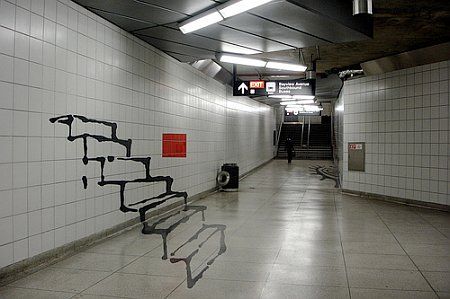
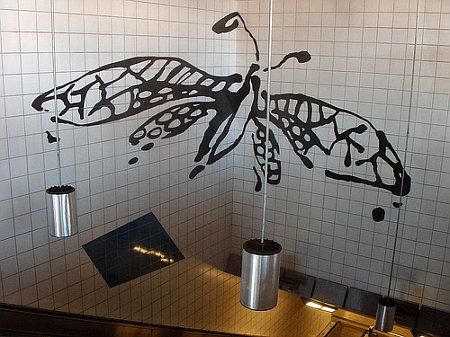
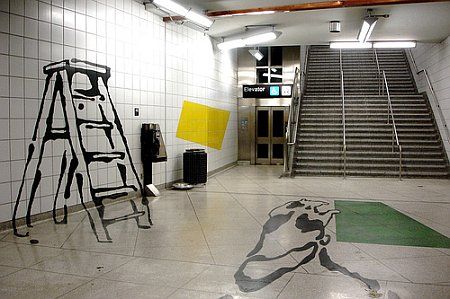
Bayview Subway Station, Toronto


Perspective art at a subway

Friday, June 16, 2006


World royalty feasts with Thai king on 60th anniversary

Royalty from across Asia, Europe, the Middle East and Africa joined Thailand's king at a state banquet to celebrate his 60th year on the throne as the world's longest-reigning monarch.

Thai King Bhumibol Adulyadej will welcome royals from 25 nations at a sparkling new throne hall on the grounds of the Grand Palace, a glittering compound of golden temples in central Bangkok.

The 78-year-old monarch, who made his reputation by helping poor farmers rather than hosting extravagant parties, will serve his guests seafood and vegetables produced by projects he sponsors to help ease rural poverty.

The guest list includes Japan's Emperor Akihito, Britain's Prince Andrew, Spain's Queen Sofia, Jordan's King Abdullah II, Brunei's Sultan Haji Hassanal Bolkiah, and Monaco's Prince Albert II.

Royals also came from Bahrain, Belgium, Bhutan, Cambodia, Denmark, Kuwait, Lesotho, Liechtenstein, Luxembourg, Malaysia, Morocco, the Netherlands, Norway, Oman, Qatar, Swaziland, Sweden, Tonga and the United Arab Emirates.


Nearly a week of festivities for the jazz-playing king have highlighted his enduring popularity in a country that has undergone tremendous political and social change during his reign.

One million people flocked to Bangkok's marble palace on Friday to hear him give only the third public audience of his rule.

Millions more around the country have worn yellow shirts and wristbands for a week to honor the king with the color associated with Mondays, the weekday he was born in 1927.

At that time, Thailand was still the Kingdom of Siam and monarchs ruled with absolute power.

As Bhumibol took the throne amid the ashes of World War II, he redefined the role of the king in a nation that had become a constitutional monarchy but faltered -- sometimes violently -- as it evolved into a democracy.

Link

Friday, June 09, 2006

Worldcup 2006 fever !

Brasil fan Francis at Fan Fest Berlin

Brasil fan Francis, works in a beer tent at Fan Fest Berlin. She seemed confident about Brasil's chances.

Author: WorldCupBlog
Keywords: WorldCup WorldCupBlog Football Berlin BrasilFan Francis
Added: June 8, 2006

technorati tags:, , ,

Blogged with Flock

Geotagged Photos

Zooomr 2.0 Screenshots, New Features

Zooomr, the company launched by 17 year old Kristopher Tate (he’s now 18) in March, will be releasing a new beta version 2.0 sometime around the end of June. The biggest focus of the new release will be increased stability and speed - Zooomr was taken down repeatedly by massive traffic spikes around its launch.

There’s a lot I like about Zooomr, but where they are really pushing the envelope is on photo metadata, particularly geotagging via a mashup with Google maps. Zooomr is also creating technology to help people understand when events are occuring, possibly via photos from users that don’t even know each other. When Zooomr sees photos being uploaded within a time window that are similarly geotagged, it assumes an event is occuring and groups those photos accordingly. The only difficult part of all of this is that it takes a lot of time for a user to associate location information with a photo…and that means many users won’t do it.

Look out for smart sets in version 2.0 as well, giving users the ability to create dynamic albums on the fly based on tags, users and other information. I really like this feature in the new Yahoo Photos and expect it to be widely copied by all of the photo sites over time.

Zooomr is also focused on creating localized version of the service in as many different languages as possible. In the 2.0 release they’ll add Romania and Norway to the sixteen other versions they currently support. For non English speakers, Zooomr may be the most compelling photosharing option.

There are lots of other feature additions as well. I’ll update as the new version is released.

Screen shots are here.

Tags: , , , , ,

technorati tags:, ,

Blogged with Flock

Thursday, June 08, 2006


Etsy Gets Funded by Web’s All-Stars

Etsy, the online marketplace for handmade items, received a small funding round last week. The participants included Flickr founders Stewart Butterfield and Caterina Fake, del.icio.us founder Joshua Schachter, Albert Wenger (former president of del.icio.us) and Union Square Ventures. The money is going towards a redesign, some new hires and managing Etsy’s growth. But the gesture itself is more significant: the web’s all stars think Etsy is a winner.

Link

Wednesday, June 07, 2006


Can you feel the force?

We all know alternative health has something to do with the floatier side of medicine: acupuncture, herb-wielding Chinese men, that kind of thing. Often the word "holistic" crops up and - depending on what sort of company you're in - some eye-rolling.

But just how floaty is alternative health? More people are looking beyond the gym and the GP for help with pain-relief, stress-management and spiritual wellbeing. The Open University now provides a course on alternative health, Prince Charles has sung its praises to the WHO and more NHS trusts are offering complementary therapies. They can't all be nutters, can they?

Link

Tuesday, June 06, 2006


Picture Perfect

Which Web sites create the best photo albums?

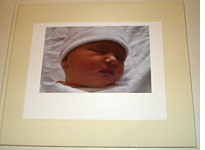
I have never been much of a picture taker, but after my daughter was born two months ago, I started snapping photos at every sniff, yawn, and burp. Soon after I entered this Richard Avedon phase, however, I discovered the Catch-22 of digital photography: The more pictures you take, the harder they are to share. Gather everyone around your computer monitor? Boring. E-mail your online slide show? Grandma complains she can't log in.

Link

Monday, June 05, 2006


Thai Elephant Orchestra (Mulatta Records)

This is, I believe, the first CD ever recorded of instrumental music featuring non-human players. It's a project of the Thai Elephant Conservation Center, a government facility in which domestic elephants are making the transition from forest workers to interspecies ambassadors. In keeping with the center's exploration of human-elephant interaction, a set of instruments were designed with the elephants' particular dexterity and strength in mind. The resulting music is uniquely fascinating.
Link

Friday, June 02, 2006


what you'll look like in the future

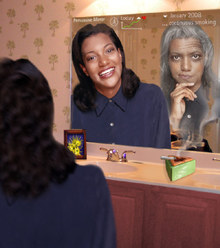
Accenture's Persuasive Mirror - shows you what you'll look like in the future.

Accenture have just officially unveiled their "Persuasive Mirror" today, the idea being that instead of being a true mirror, a camera picks up your image and after some processing, shows you how you will look in the future.

Now, if that isn't terrifying enough, a small army of cameras in your home will have been picking up your eating, sleeping, smoking, sunbathing and exercising habits. The information gathered from these cameras will then influence how your future-face is processed, i.e. more wrinkles due to too much sun, yellow teeth from smoking, etc. A virtuous week of course should be rewarded by a more flattering middle-aged you.

Link ( via Shiny Shiny )

Thursday, June 01, 2006


Old monitor = cat bed

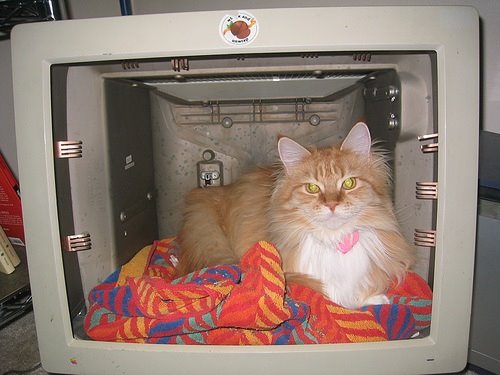
Oskay2 turned an old monitor into a cat bed, seems like the cat likes it, or it's just a clever background image - "JellyBean hangs out in Harley's converted Apple Two-Page Monochrome Monitor, which has been repurposed into a cat bed. I removed the CRT, circuit boards, and added the towel and some catnip. " - Link.

Source

Monday, May 29, 2006


Websites as graphs
Would you like to see a visual representation of your website's structure? Someone else's? Check out Websites_as_graphs and you'll see some of the best known sites on the web graphed using a Java applet on the page, created by Sala at his Aharef blog.

If you're a Flickr fan, you can check the websitesasgraphs tag to see graphs that people have created. Each one different, and beautiful.
Link

Loving your pets to death

Australia is a nation of pet lovers but it may be loving its animals to death with pet owners passing on rising levels of obesity by overfeeding their cats and dogs, the country's main animal welfare body says.
Lawrie told Reuters surveys had found that between 40 and 44 percent of dogs and more than one in three household cats were now overweight, due to poor diet and a lack of exercise.

Fat cats and dogs were more vulnerable to diabetes, arthritis, heart problems and liver disease.

Dogs most at risk were Labradors, Beagles and cross-breeds such as Labradoodles -- a mixture of a Labrador and a Poodle -- with household moggies more at risk than other types of cats.
Link

Wednesday, May 24, 2006

Flickr

This is a test post from flickr, a fancy photo sharing thing.

The King who Cares
Born into a family of medical professionals, health and medicine had always been prominent in His Majesty King Bhumibol Adulyadej’s childhood. His father, HRH Prince Mahidol of Songkhla, was a pioneering doctor who dedicated his life to the plight of the rural poor. He initiated numerous healthcare programmes that brought medical care to the far reaches of the provinces, where modern medicine had previously been unheard of.His mother, the late Princess Mother, was a trained nurse who tenaciously supported her husband’s causes. After the death of Prince Mahidol, she continued to carry out his work and started numerous public health programmes.Growing up against a backdrop of dedication and service to public health, it comes as no surprise that His Majesty the King has followed in the footsteps of his parents and is an ardent advocate of health and medical concerns. While His Majesty, in recent years, is seen as being more active in areas such as rural development, water conservation and the environment, he has remained a compassionate champion of issues related to health and medicine since the end of World War II.At that time, state-run medical facilities in the provinces were scarce and under-developed. “During His Majesty’s frequent visits to rural areas, he would come across sick, malnourished people or those suffering from malaria who were desperate for medical attention and did not know where to get help,” says Magsaysay Award recipient Dr Prawase Wasi.“Since then His Majesty has traveled with a team of doctors and nurses to treat those who come to him with their illness. When he meets someone with a serious disease, he will write down their names before sending them off to the hospital. He’s been doing this for years. It gives people great hope to see him. It’s a cause that has stayed close to the King’s heart,” says Dr Prawase.His Majesty’s actions prompted a fundamental change in the attitude of healthcare authorities, says Dr Prawase. In the past the attitude and practice was that the ill had to go to hospital for treatment. By taking mobile medical teams with him wherever he went, His Majesty changed this attitude. “Medical professionals saw that they had to go out to the sick and not wait for them to come to the hospital. This led directly to changes in the structure of the healthcare delivery structure by the Public Health Ministry.”“[Doctors and health care officials] began to realise that medical treatment and public health care had to be distributed because that was the only way it could reach the people. They realised volunteers, health workers and nurses should play a role in this. This was the groundwork for what is now called ‘basic healthcare work’. I think that the King played a great role here in changing attitudes. And he did it without giving orders but by setting an example.”Apart from the official attitude to healthcare, His Majesty was also instrumental in encouraging villagers to care for themselves, first by adopting basic preventive healthcare measures rather than waiting until they fell ill. Wherever he went, His Majesty would advise rural residents on how they could take care of themselves.Apart from being instrumental in changing attitudes and actively assisting national health programmes, His Majesty has played a direct role in assisting the eradication of several diseases that were widespread in the country. After the Second World War, former public health minister Dr Sem Pringpuangkaew explains, the country’s most dreaded disease was tuberculosis.“The state did not know how to contain the disease because at that time there weren’t any sanitoriums to house those infected. The King, however, took a personal interest and set up the Anti-Tuberculosis Society to help prevent the disease from spreading,” he recalls.With a personal donation to the Red Cross Science Division, the Mahidol Wongsanusorn building was constructed in 1950 to produce BCG vaccines. UNICEF later bought the vaccines for use in other Asian countries.His Majesty was also instrumental in eradicating leprosy. Dr Sawasdi Daengsawang, then the director general of Public Health, was one of the first to turn to His Majesty when the disease became rampant in the mid-1950s. “I asked the King for help because at the time leprosy was spreading so quickly that in some cases in the Northeast, entire villages were becoming infected.”“In 1955 leprosy was everywhere in the streets,” says Khwankeo Vajarodaya, Grand Chamberlain of the Royal Household Bureau. “The Public Health Ministry had a plan to bring it under control in 12 years, but the King wanted it tackled much faster. A doctor told him that it could be done in eight years if there was an institution to train more professionals. So His Majesty set up the Rajaprajasamasai Foundation which also served as a research and development centre.“His foundation is directly responsible for dramatically bringing down the incidence of leprosy,” says Mr Khwankeo.Dr Vichai Chokevivat, Deputy Director-General of the Communicable Disease Control Department, agrees that His Majesty played a significant role in eliminating polio from Thailand. Apart from private donations to set up the Polio Welfare Fund and building the Vajiralongkorn Tarabambat building at the King Mongkut Hospital, he spearheaded the drive to raise funds for vaccines. His Majesty used his volunteer radio to call on Thais for donations to buy equipment to help those stricken with polio.The country responded. Mr Khwankeo notes that it was His Majesty who initiated the use of Jacuzzis to treat the disease and donated equipment to Siriraj Hospital.Polio was later eliminated from Thailand. It reappeared in the 1990s following the influx of Cambodian refugees 10 years earlier. Dr Vichai says that a campaign launched to inoculate all Thai children against polio proved highly effective: Only one child was reported to have contracted the disease. The campaign continued for three years until polio was eliminated from the country once again. “We have to recognise that we have reached this stage because His Majesty the King took an interest in the well-being of his subjects,” the doctor says.Since 1946, His Majesty has injected millions of baht of personal funds to assist numerous national healthcare programmes. The Thai Red Cross has been a primary bene- ficiary of HM’s support, especially in its work producing vaccines and serums. In 1952 His Majesty set up a blood service centre which developed into the National Blood Service Centre in 1969.At present the centre has branches throughout the country, saving thousands of lives each year. It produces saline drip for sale, while blood is distributed free of charge.His Majesty has expanded the work of the Red Cross to cover the whole country. His Majesty has assisted in providing funding for research on diseases relating to hormones, bones and joints, the nervous system and the blood. He has set up a fund for medical research, a foundation to promote cleanliness and health among schoolchildren, and a vocational centre for soldiers and border patrol policemen who have been disabled while protecting the country.In addition to His Majesty the King’s commitment to addressing current and future healthcare needs is his belief in funding the future development of Thai medical professionals.“There must be continuous training of people who are skilled and experienced in public health care”, says Dr Prawase.The late Princess Mother saw the importance of this and used personal funds to send many Thais to study medicine overseas. Dr Klum Vacharobol, Dr Sri Sirising, Dr Sawadi Sadaengsawang, Dr Luang Nit Vechavisit, and many other doctors who have become teachers of the medical profession were among recipients of the Princess Mother’s support. These people went on to play a crucial role in laying the foundation of medical and public health work in Thailand.His Majesty continued to support his mother’s work by establishing the Ananda Mahidol Fund to send doctors to further their education overseas. Dr Charas Suwanvela, former president of Chulalongkorn University, was the first recipient. Later the fund became a foundation and is now open to public donations.His Majesty allocates a considerable amount of time to the foundation, acting as its honorary chairman and paying great attention to its financing. Students under this foundation would be granted an audience with HM the King, during which they would be given invaluable advice before going overseas. On their return they would be granted another audience in which His Majesty would ask about what they had learnt. His Majesty would on occasion spend hours talking with them.As a healthcare advocate, His Majesty the King’s contributions remain immeasurable, and build upon the pioneering work of his late father and mother. Perhaps the best way to describe His Majesty’s attitude towards health care would be to use his own words. During a visit to a tuberculosis treatment centre on April 6, 1950, HM said to then Health Minister Luang Payung Vejchasart, “Is there a medicine that can cure this disease? If you lack any medicine I will find it for you. I want to see Thai medicine progress.”
The king who cares
Link

Sunday, May 21, 2006


It's Not Just Tissue...It's A Tiny Human Being!


It's Not Just Tissue...It's A Tiny Human Being!
By 5 weeks, the child's brain has human proportions, pituitary gland is forming and mouth, ears and nose are taking shape


By 8 weeks, every organ is present, heart is beating sturdily, kidneys function, taste buds are forming. By 10 weeks, the baby will squint, swallow, frown and smile and is sensitive to touch.

By 3 months, child is able to kick, make a fist, curl toes, turn head, bend his wrists and open his mouth.

By 4 months, the child can grasp with hands, turn somersaults and swim. Mother begins to sense movements.


By 5 months, sleeping habits appear and child responds to sound. A loud noise may startle the child into jumping in reaction.

By 6 months, fine hair grows on eyebrows and head. Eye lash fringe appears on lids.

900 GRAMS
By 7 months, eye teeth are now present; baby uses all four sense of hearing, vision, taste and touch. Hand grip is strong. Baby is able to recognize his mother's voice.

By 8 months, hair covers the baby's head. Skin begins to thicken and is healthy in color. Fingernails grow beyond baby's finger tips and the living quarters are getting crowded.

Mary Said "Yes" To God's Precious Gift....Won't You?
Say "YES" To Life!

Link


Tattoo Removal
No one knows when the practice of tattooing the skin began, but Egyptian mummies dating back to 1300 B.C. have shown evidence of blue tattoo marks. Tattooing is accomplished by injecting colored pigment into small deep holes made in the skin. Regardless of who injects the pigment - a tattoo artist or an untrained person the marks or designs are relatively permanent. For various personal reasons, people turn to physicians to have tattoos removed.

Fortunately, there are several methods for tattoo removal which have proven successful. In most cases, however, some scarring or color variations remain. The conspicuousness of these blemishes depends upon several factors including size, location, the individual's healing pro-cess, how the tattoo was applied, and length of time it has been on the skin. A tattoo performed by a more experienced tattoo artist, for example, may be easier to remove since the pigment is evenly injected in the same level of the skin. A tattoo that has been on the skin for a considerable length of time may be more difficult to remove than a new one.

Methods of Tattoo Removal

There are several excellent methods of tattoo removal available today. The method that the physician chooses will depend upon the size of the tattoo and its location as well as the length of time it has been on the skin. How the patient heals may also be a factor in the decision.

Excision

Another popular method of tattoo removal especially when the dyed area is small is by excision. The advantage of this method is that the entire tattoo can be removed. With larger tattoos, however, it may be necessary to excise in stages, removing the center of it initially and the sides at a later date.

Excision involves an injection of a local anesthetic to numb the area after which the tattoo is removed surgically. The edges are then brought together and sutured. With this procedure, there is minimal bleeding which is easily controlled with electrocautery. In some cases involving large tattoos, a skin graft taken from another part of the body may be necessary.
Dermabrasion

Another method of tattoo removal is called dermabrasion in which a small portion of the tattoo is sprayed with a solution that freezes the area. The tattoo is then "sanded" with a rotary abrasive instrument causing the skin to peel. Because some bleeding is likely to occur, a dressing is immediately applied to the area.

Laser

In recent times, many physicians consider laser surgery one of the best methods of tattoo removal . Today, the Q-switched Nd:Yag, Q-switched Alexandrite and the Q-switched Ruby are among the most frequently used lasers today for the removal of unwanted tattoos. They are all employed in a similar manner. If necessary, a cream to numb the skin can be applied prior to the treatment. Pulses of light from the laser are directed onto the tattoo breaking up the tattoo pigment. Over the next several weeks the body's scavenger cells remove the treated pigmented areas. More then one treatment is usually necessary to remove all of the tattoo.

Salabrasion

Salabrasion, a procedure which is centuries old, is a method still sometimes used today to remove tattoos. As with the other methods, a local anesthetic is used on and around the tattooed area after which a solution of ordinary tap water dipped in table salt is applied. An abrading apparatus such as the one used with dermabrasion, or an even simpler device such as a wooden block wrapped in gauze, is used to vigorously abrade the area. When the area becomes deep red in color, a dressing is applied.
What Results Can Be Expected?

Regardless of which method of tattoo removal is used, some scarring or color variations are likely to remain. Healing time varies depending upon the size and depth of the tattoo, the proce-dure used and the patient's healing process. It is important for the patient to discuss with the physician the various procedures, how they are performed, and the probable results. Care of the treated area must also be discussed.


Link

Friday, May 19, 2006


Love me love my elephant!!!!!

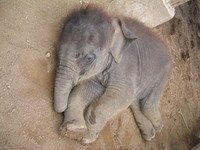
If you love elephants then The Elephant Conservation Centre between Lampang and Chiang Mai is the place for you, as they love and care for elephants here too.You can come and see a show demonstrating the incredible abilities of the elephant and the many skills they have acquired through years of training and companionship with a mahout, or you could as we did come for a three-day mahout training course and really get to know your elephant.
Link